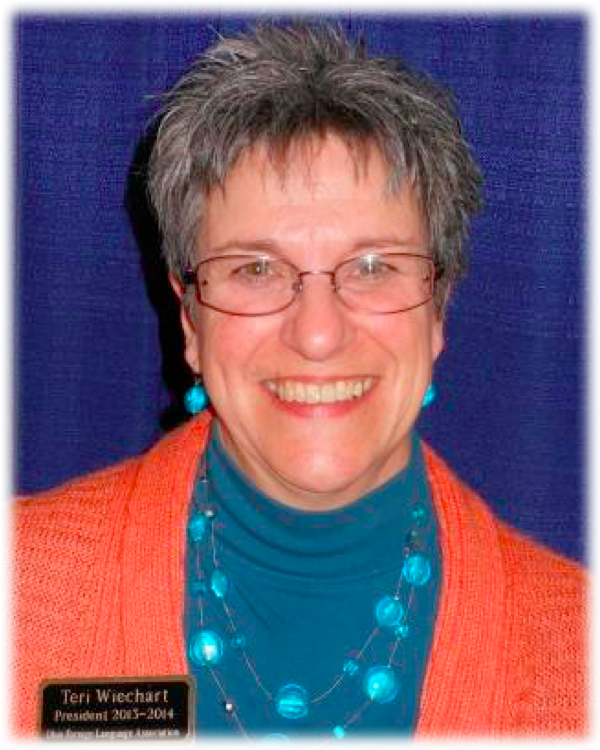
Teri Wiechart, OWLA Bylaws Chair
Retired, Delphos Jefferson High School
If a student walked into your classroom today and asked, “Should I become a teacher?”—what would you say?
Would you hesitate, weighed down by the realities of burnout, budget cuts, and political interference? Or would you lean in, remembering the moments of magic that only this profession can offer?
Now imagine that same student asking, “Can you give me five reasons to go to college to become a teacher?” Here’s what you might say:
- You’ll change lives—every single day.
- You’ll grow into a leader, communicator, and advocate.
- You’ll join a community of passionate changemakers.
- You’ll gain skills that transfer across industries and borders.
- You’ll leave a legacy that ripples far beyond your classroom.
Yes, there are reasons not to teach. We know them well. But when we focus only on the challenges, we risk silencing the very voices that could transform our schools. And in world languages, the stakes are especially high.
In recent months, several Ohio universities have announced significant cuts to world language departments—eliminating majors and minors, reducing faculty, and consolidating programs. These decisions, often framed as “strategic realignment,” threaten the linguistic and cultural competencies our students need to thrive in a global society.
Why are universities making these cuts? One major reason: lack of enrollment in language education programs. And why aren’t students enrolling? Because too often, they’re being discouraged—from within our own ranks.
When teachers tell students not to pursue education, it often stems from exhaustion or disillusionment. But our words carry weight. If we want better schools, we need passionate, thoughtful people to step up—and that starts with us encouraging them.
So what messages are we sending—intentionally or not—about the value of teaching? How might we share the realities of the profession without discouraging future changemakers? What would it look like to mentor students into education with honesty and hope?
There is so much over which we have little control. But this—this is something we can do. For our future. For our profession.
Despite the cuts, world language educators continue to innovate. From virtual exchanges to interdisciplinary partnerships, we are reimagining what’s possible. Let this moment be a call to action—not retreat.
If your program is facing cuts, or if you want to support colleagues who are, consider joining advocacy efforts through OWLA and national organizations like ACTFL and JNCL-NCLIS. Together, we can amplify our voices and protect the future of world language and multilingual education.
Let’s be the voice that says, “You’d be an incredible teacher.” Let’s change the narrative—before it’s too late.
 The Cardinal