
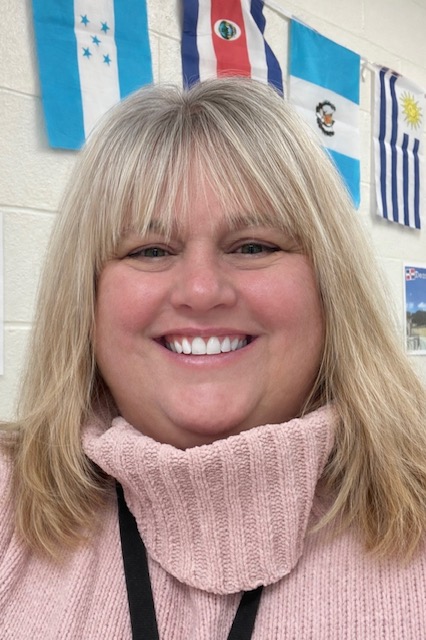
Jessica Burchett, OWLA Multilingual Learning Chair
Spanish Teacher, Marion City Schools
Every Friday, the ESL and Spanish teachers intentionally collaborate to create a dynamic, student-centered learning experience that blends language practice, community building, and fun. What began as a simple idea—to give students more authentic opportunities to use language—has grown into a structured, engaging routine that students look forward to each week. By bringing Spanish 2 students and ESL students together, Fridays become a shared space where language learning feels purposeful, supportive, and enjoyable.
The foundation of this collaboration is the belief that language is best learned through interaction. Both ESL and Spanish students benefit from meaningful conversations with peers, especially when those conversations are guided and low-pressure. Fridays are designed to reduce anxiety around speaking while still holding students accountable for using correct vocabulary and sentence structures. Students are not just practicing language for a grade—they are using it to connect, problem-solve, and have fun.
Each Friday begins with chat mats, a structured conversation activity that ensures all students have an equal opportunity to speak and listen. Students are paired intentionally, often with one Spanish 2 student and one ESL student working together. The chat mats include prompts, visuals, sentence frames, and vocabulary supports so that students at varying proficiency levels can participate confidently. The activity is divided into two parts: one conducted in English and one in Spanish. This intentional language switch reinforces the idea that both languages are valuable and that all students bring strengths to the table.
During the English portion of the chat mat, ESL students practice conversational and academic English in an authentic context, while Spanish students model fluent speech and provide peer support. When the class transitions to Spanish, the roles often shift: Spanish students practice their target language, while ESL students, many of whom are multilingual, experience what it feels like to be a language learner, using strategies such as asking for clarification, using context clues, and relying on visuals. This mutual exchange builds empathy, patience, and respect among students.
Chat mats also serve an important instructional purpose. The prompts are aligned with current units in both classes and are designed to practice specific vocabulary, verb tenses, and sentence structures. Teachers circulate, listening for language use, providing feedback, and celebrating student success. Because the activity feels conversational rather than formal, students are more willing to take risks, make mistakes, and try again—all key components of language acquisition.
After completing the chat mats, students transition into the most anticipated part of Friday: game-based language practice. Games are carefully selected or adapted to ensure that students must use language in order to participate. Rather than doing worksheets or drills, students practice speaking, listening, reading, and critical thinking through play. This approach keeps students engaged while reinforcing academic goals.
Popular games include Headbands, where students ask and answer questions using descriptive vocabulary and sentence frames; Guess Who, which encourages precise descriptions and comparative language; and Spot It, a fast-paced game that builds vocabulary recognition and quick oral responses. Games like Apples to Apples and the Meme Game promote higher-level thinking, humor, and discussion, requiring students to justify their choices using complete sentences. Even more complex games, such as Clue, are adapted so that students practice question formation, inference, and logical reasoning in both languages.
Whenever possible, games are played in both English and Spanish, or students rotate languages depending on the round. Teachers provide language supports such as word banks, sentence starters, and visual cues so that all students can participate successfully. The goal is not perfection but communication. Students quickly learn that the more they use the language, the easier it becomes—and the more fun the game is.
These Friday game days also foster collaboration and leadership. Spanish 2 students often take on mentoring roles, helping explain rules or model language for their ESL partners. At the same time, ESL students bring unique perspectives, cultural knowledge, and multilingual skills that enrich the experience for everyone. The classroom becomes a community rather than two separate programs sharing a space.
Beyond language development, the collaboration strengthens social connections. Students who might not normally interact build friendships through shared laughter, teamwork, and problem-solving. The relaxed atmosphere helps break down barriers and builds confidence, particularly for students who may feel hesitant to speak in traditional classroom settings. Over time, teachers notice increased participation, improved pronunciation, and a greater willingness to engage in class discussions throughout the week.
For teachers, the collaboration is equally rewarding. Planning together allows ESL and Spanish teachers to align goals, share strategies, and reflect on student progress from different perspectives. It also reinforces the idea that language learning is interconnected and that students benefit when educators work as a team.
Ultimately, Friday collaboration days demonstrate that learning languages does not have to be isolated or intimidating. Through chat mats, games, and purposeful interaction, students practice real-world communication skills while building confidence and community. Fridays have become a highlight of the week—a reminder that when students are engaged, supported, and having fun, meaningful learning naturally follows.
 The Cardinal