
How I use ChatGPT to Build Proficiency (and Challenge Myself!)
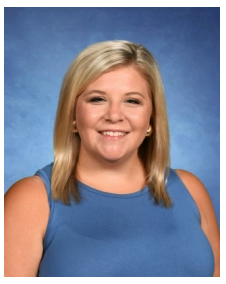
Alexis Blum, OWLA Professional Development Chair
Spanish Teacher, Wapakoneta High School
Two years ago, OWLA hosted a webinar on Artificial Intelligence and the new (and intimidating) tools that were rapidly becoming available for teachers. I remember feeling excited about the possibilities of these new resources, but also felt apprehensive that there was going to be such a steep learning curve in the coming months. In the past two years, we have seen an explosion of AI tools on all kinds of websites. Every website seems to have some element of AI to it now.
As educators, we are constantly exposed to new resources with sparkly AI tools available right at our fingertips. It is very intimidating to decide if, when, and how to use this technology. I stand firmly on the side that AI is not a replacement for creative thinking, problem solving, or people. From my perspective, AI is a tool that teachers can use to enhance instruction and the learning experiences that we provide for our students.
In September of this year, OWLA hosted another webinar on AI Tools with Rachel Benson, the Central States Teacher of the Year. Rachel showed participants several exciting tools and challenged us to start using AI to improve language proficiency in the classroom. This sparked an idea for me: I started using ChatGPT as a resource to help me improve my teaching and the activities I was doing in my classroom. I thought about where I felt the most insecure in my instruction, which was grading on the proficiency scale. I wanted to improve not only how I assess using the proficiency scale, but also how I use it to demonstrate student knowledge and growth.
First, I asked ChatGPT to analyze a text for the proficiency level needed to comprehend it, according to the ACTFL standards. I also asked it to determine the proficiency level needed to answer each of the questions that I had provided. I use these questions as a comprehension check, but were they really helping me determine the proficiency level of my students?
I use texts every day in class, but some texts I was using seemed to challenge my students beyond their proficiency levels. Others were easy to read, but the questions were too difficult. I struggled to find the right fit, even after 12 years of teaching. There were some texts that I thought were too advanced for my students, but ChatGPT explained that while the text itself was more complex, the questions did not push my students beyond their limits.
Here are examples of prompts I put into ChatGPT:
- “Analyze this text and rate the proficiency level necessary to comprehend it according to the ACTFL proficiency scale.”
- “Suggest questions or activities to check reading comprehension of this text at the Novice Mid, Novice High, and Intermediate Low levels.”
- “Suggest ways to improve this text to meet the indicators of an Intermediate Mid Proficiency level according to the ACTFL Proficiency Guidelines.”
ChatGPT offers helpful advice and points out ways that I could amplify or simplify proficiency. Some of the suggestions fit for me, others do not. I use my own judgment, knowledge of my classroom, and understanding of teaching language to guide my practice. ChatGPT provides me with insights that I hadn’t considered before. For example, it has offered to create higher-level questions for me, such as one or two Intermediate Low questions for a Novice-level text. This was something that I had tried to do on my own, but nearly always crashed and burned. ChatGPT also provides explanations as to why certain questions are Novice Mid, Novice High or Intermediate Low, which I find to be very helpful. Using this resource has made me a better teacher because it gives me opportunities to think critically and creatively about how I measure proficiency in my classroom.
Again, I’m here to say that ChatGPT is not a replacement for critical thinking or creative processes. It has provided me with examples and strategies that I have found useful for my assessment of student performance. This is simply a way that I have used this tool to challenge myself and create better learning experiences for my students.
 The Cardinal